
Walk into a craft store’s embroidery aisle and it’s easy to leave with a basket full of things you’ll never use. The good news: hand embroidery needs very little. This checklist covers the six things you really need, the extras worth adding once you’re hooked, and what you can safely skip.
The six essentials
1. An embroidery hoop
A hoop holds your fabric tight, which keeps stitches even. A 5 or 6 inch wooden or bamboo hoop is the most comfortable size to start with. It fits in your hand and holds a design you can finish in a few sittings. Our guide on how to use an embroidery hoop explains sizes and setup.
2. Fabric
Choose a plain, woven, non-stretchy fabric: cotton or a cotton-linen blend in a light color. It’s easy to trace onto, easy to stitch, and forgiving. Cut it at least 2 to 3 inches larger than your hoop on every side so it has room to grip.
Avoid stretchy knits (like T-shirt fabric) and very loose weaves for your first project.
3. Embroidery floss
Six-strand cotton floss is the standard. For your first design you only need the handful of colors it calls for. Our embroidery floss guide explains strands, lengths and how to separate them without tangles.
4. Embroidery needles
Embroidery (crewel) needles have a sharp point and a long eye that’s easy to thread with several strands. A mixed pack of sizes 3 to 9 covers almost everything. Use a larger needle for more strands and a finer one for one or two strands.
For cross stitch on Aida fabric you’d use a tapestry needle instead, which has a blunt tip.
5. Small, sharp scissors
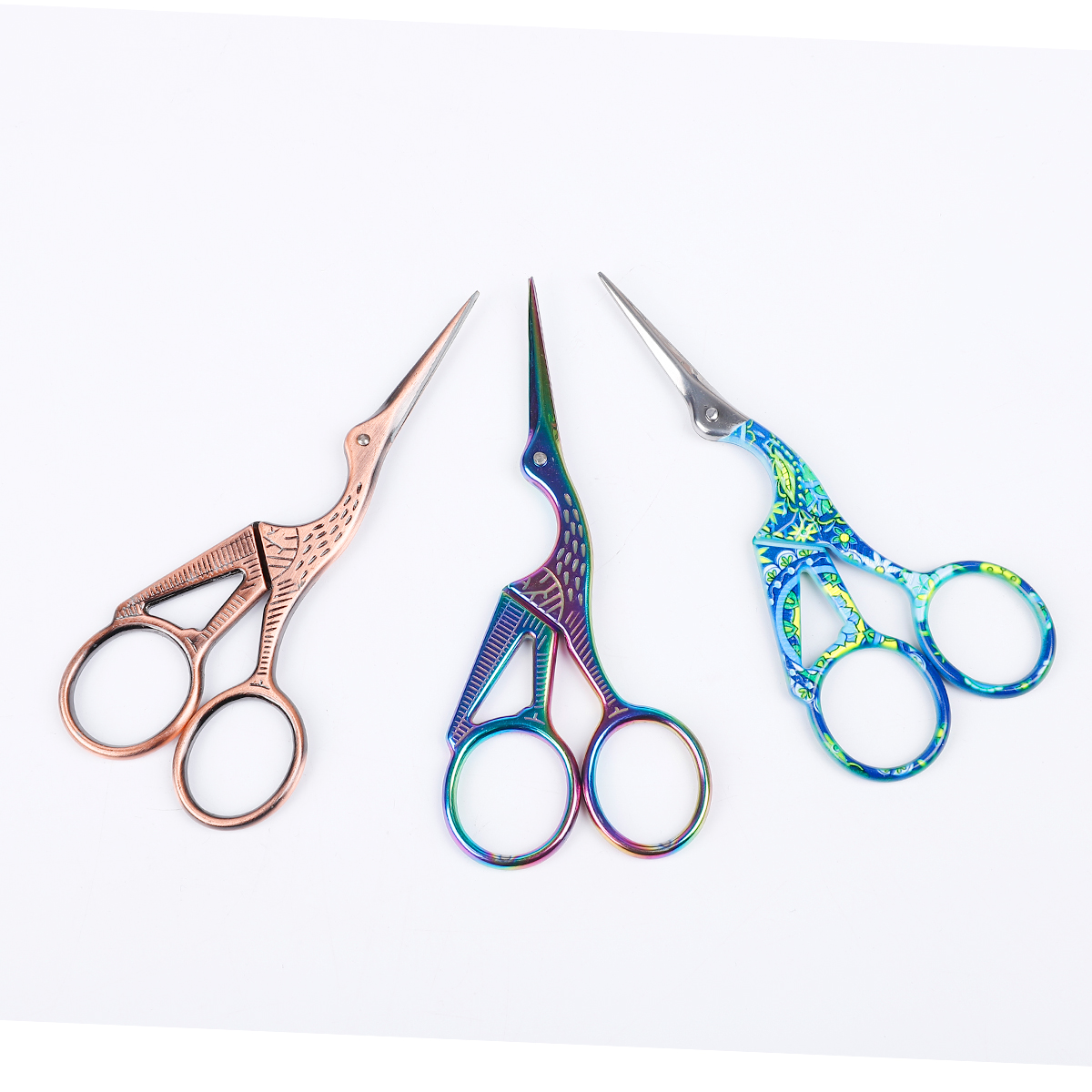
You need scissors that snip floss cleanly, close to the fabric. Small embroidery scissors with fine tips are much easier to control than big fabric shears. Keep them for thread only so they stay sharp. The classic stork shape is popular because it’s small, sharp and pretty enough to leave out on the table: see our stork embroidery scissors.
6. A pattern and a way to transfer it
Either a pre-printed design, or a pattern plus a way to get it onto fabric: a water-soluble fabric pen for tracing, transfer paper, or stick-and-stitch stabilizer. Our guide on how to transfer embroidery patterns compares five methods.
That’s it. With these six things, you can learn every basic stitch and finish a piece worth hanging on the wall.
Nice-to-haves (add them later)
Once you’ve finished a project or two and know you enjoy it, these make stitching more comfortable:
- Needle threader: a small wire loop that pulls floss through the eye. Handy for tired eyes and thick floss.
- More floss colors: a full color range lets you stitch any pattern without a shopping trip. Our floss set comes in 50 or 200 colors.
- Floss bobbins and an organizer box: keep colors labeled and tangle-free.
- Needle minder: a small magnet that holds your needle on the fabric between stitches.
- Seam ripper: removes mistakes quickly without damaging the fabric.
- Water-soluble stabilizer sheets: for stitching on tote bags, denim and dark fabric.
- A few more hoop sizes: a 4 inch hoop for small motifs and an 8 inch hoop for larger pieces or punch needle.
- Felt: for backing finished hoops.
What you can skip at the start
- Embroidery stands and frames: useful for large pieces and long sessions, but a hand-held hoop is fine for small projects.
- Specialty threads: metallic, silk and rayon threads are beautiful but slippery. Learn with cotton first.
- Large “every stitch” tool kits: many include low-quality extras you won’t use. Buy the essentials, then add what you actually miss.
- Lots of fabric: a couple of fat quarters of plain cotton will last for several projects.
Kit or build your own supply box?
Both work. The right choice depends on what you want from your first project.
Choose a kit if:
- you want to start stitching the day the box arrives,
- you’d rather not choose colors or trace a pattern,
- you’re buying a gift for someone who has never stitched.
A beginner kit has the design pre-printed and the exact floss colors included, so you only focus on stitches. Our beginner embroidery kits include printed fabric, floss, needles and a hoop. If you want to learn many stitches at once, the stitch sampler kit prints the stitch name beside each practice row.
Build your own box if:
- you already know you want to stitch your own designs,
- you want to embroider on clothing or bags you already own,
- you like choosing colors.
In that case, start with a hoop, a pack of needles, small scissors, a good range of floss, some plain cotton and a fabric pen. Browse our embroidery supplies for the basics.
A beginner’s shopping list
Copy this and you’re ready:
- One 6 inch wooden or bamboo hoop
- Half a yard of light-colored cotton or cotton-linen fabric
- Six-strand cotton floss in the colors of your first design
- A mixed pack of embroidery needles, sizes 3 to 9
- Small, sharp embroidery scissors
- A water-soluble fabric pen, or a pre-printed design
Then, when you’re ready: a needle threader, more floss colors, a seam ripper, stick-and-stitch sheets and a second hoop size.
FAQ
What supplies do I need to start embroidery?
A hoop, plain cotton or linen fabric, six-strand embroidery floss, embroidery needles, small sharp scissors, and a pattern with a way to transfer it or a pre-printed design.
What is the best fabric for beginner embroidery?
A plain, woven, non-stretchy cotton or cotton-linen blend in a light color. It’s easy to trace on and holds stitches well.
What size needle should I use for embroidery?
A mixed pack of embroidery (crewel) needles in sizes 3 to 9 covers most projects. Use larger needles for more strands and finer ones for one or two strands.
Is it cheaper to buy an embroidery kit or supplies?
For a single first project, a kit is usually cheaper because you only get the floss colors you need. If you plan to stitch many of your own designs, building a supply box pays off over time.
Do I need an embroidery hoop?
For most hand embroidery, yes. A hoop keeps the fabric tight so stitches stay even and the fabric doesn’t pucker.
What embroidery supplies make a good gift?
A beginner kit with a pre-printed design is the easiest gift for someone new. For someone who already stitches, a large floss set, a nice wooden hoop or a pair of stork scissors are popular choices.