
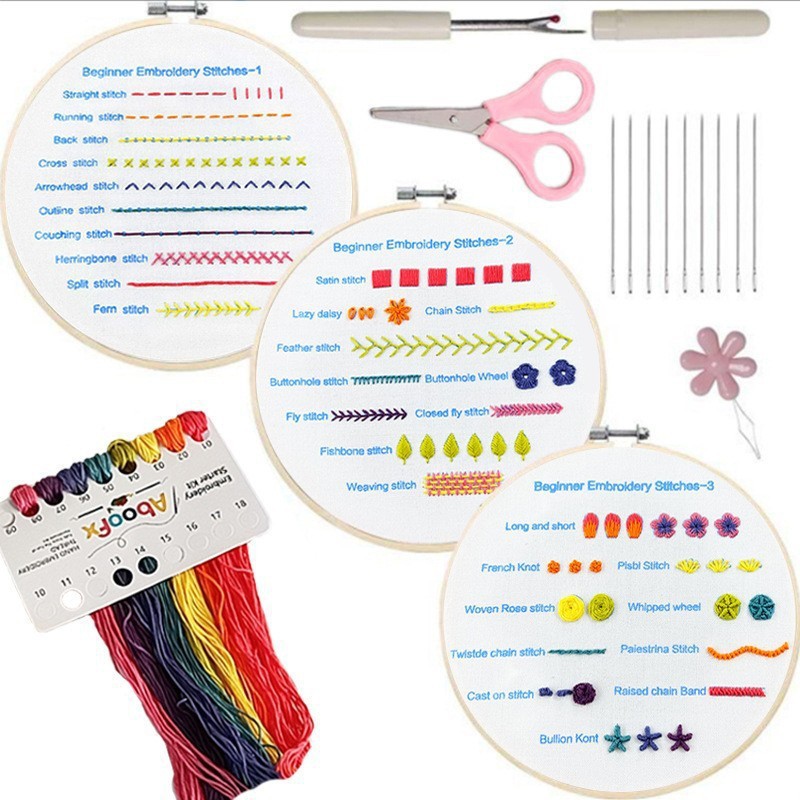
A decorative embroidery kit teaches stitches in the context of one finished design. A stitch sampler is more like a practice sheet: it gives you repeated rows or small shapes so you can learn many techniques without worrying about making one picture perfect.
Choose a stitch sampler if learning technique is the priority. Choose a decorative kit if finishing a piece you want to display will keep you motivated.
What you learn from a stitch sampler
A sampler can expose you to running stitch, back stitch, stem stitch, satin stitch, chain stitch, lazy daisy, French knots and many more in one project. Repetition builds muscle memory quickly.
What you learn from a decorative kit
You learn how several stitches work together: outlines define a shape, fill stitches add color and decorative stitches add texture. You also practice following a finished composition.
Which feels easier?
A printed sampler often feels lower pressure because imperfect practice rows are expected. A simple decorative kit may feel easier emotionally because the picture makes progress obvious.
Which gives a better finished object?
A decorative design is usually ready to hang or gift. A sampler can also be framed, but its main value is as a reference you can keep beside future projects.
Best order for a nervous beginner
Spend one evening on a sampler, then move to a small printed kit using four or five familiar stitches. That sequence separates ‘how does this stitch work?’ from ‘how do I finish this design?’
What should be included
Look for printed fabric, clearly labeled floss, suitable needles and a hoop when the project needs one. A stitch guide or illustrated instructions are especially useful for a sampler.
FAQ
Should a beginner start with a stitch sampler?
It is a strong choice if you want to learn several stitches before starting decorative projects.
Is a normal embroidery kit easier than a sampler?
A very simple printed kit may use fewer stitch types, so it can be easier. A sampler is better for broad practice.
Can I frame a stitch sampler?
Yes. Many samplers are designed as finished hoop art as well as practice pieces.
How many stitches should a beginner learn first?
Eight basic stitches cover most beginner needs, and four of them—back stitch, satin stitch, lazy daisy and French knot—can finish many floral designs.
What to do next
Compare our stitch sampler kits with all beginner embroidery kits, and keep the 8 basic stitches guide open while you practice.