
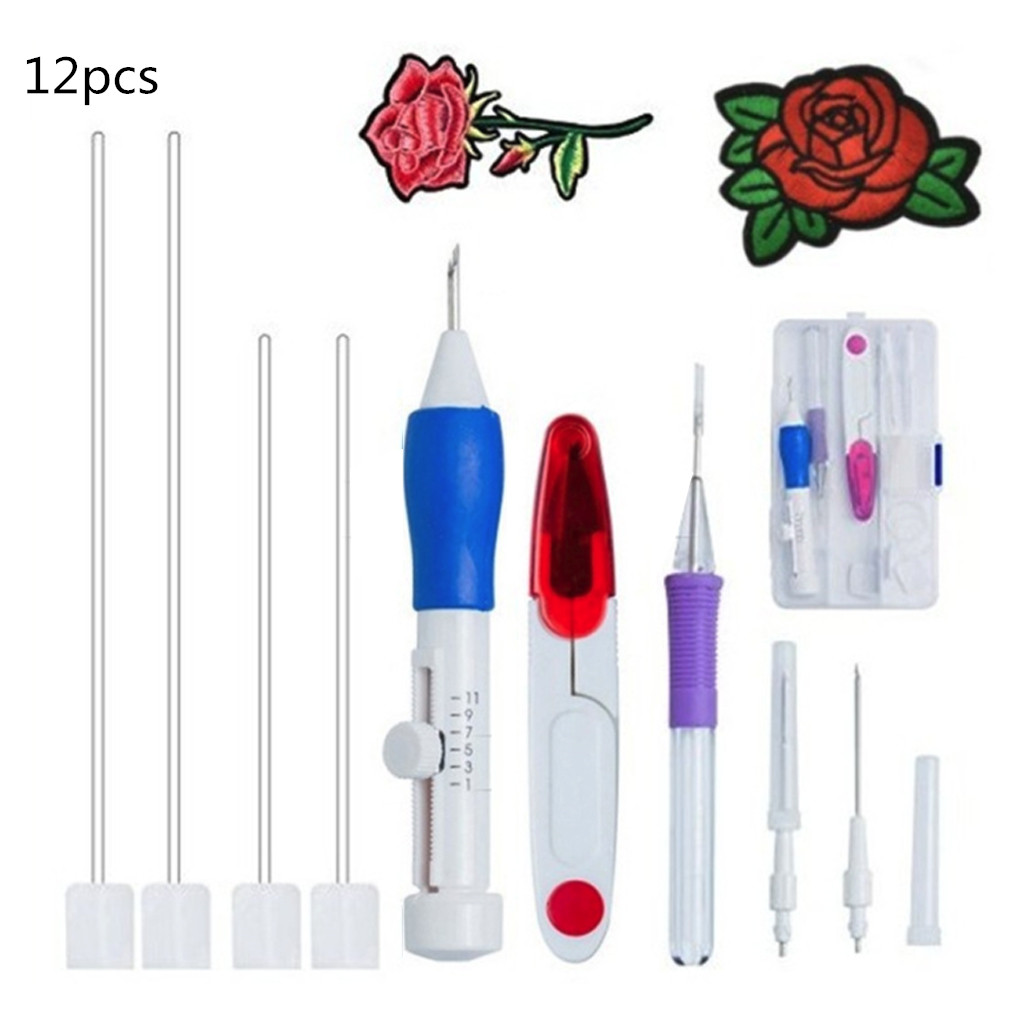
For most beginners, embroidery is the best craft to try first. It needs the fewest special supplies, the stitches are forgiving, and a pre-printed kit means you never have to plan a design. Cross stitch is a good first pick if you love counting and neat grids, and punch needle is the quickest way to a finished, fluffy piece. This guide compares cross stitch vs embroidery vs punch needle so you can choose in a few minutes.
We sell embroidery kits and punch needle kits. We do not sell cross stitch kits right now, so we will explain that craft honestly and point you to our cross stitch for beginners guide instead of a product.
Cross stitch vs embroidery vs punch needle at a glance
The three crafts all use fabric in a hoop and a needle or tool that passes through it, but the finished look and the way you work are quite different. This table sums up the main differences.
| Embroidery | Cross stitch | Punch needle | |
|---|---|---|---|
| What you make | Pictures drawn in thread, from thin lines to filled shapes | Pictures built from small X-shaped stitches, like pixels | Soft, raised loops of yarn that fill a design |
| Fabric | Plain cotton, linen or blends, usually with the pattern printed on it | Evenly woven fabric with a visible grid of holes | Cloth with the design printed on it, held very tight in a hoop |
| Main tool | A sharp needle and six-strand floss | A blunt tapestry needle and floss | A punch needle pen or tool that pushes yarn through the cloth |
| How you follow the design | Stitch over printed lines and shapes | Count squares from a chart, or stitch over printed symbols | Fill in the printed areas with loops |
| Look and feel | Flat, smooth and detailed, with room for texture | Neat, graphic and tidy | Plush, rug-like and textured |
| Learning curve | Gentle: a few stitches cover most beginner designs | Gentle, but counting mistakes can be tedious to fix | Quick to start, but even loop height takes practice |
| Speed | Depends on size and stitch density | Slower for large or dense charts | Loops fill space fast |
| Best for | People who like drawing with thread and choosing colors | People who like order, counting and charts | People who want quick, cozy results |
Keep in mind that speed and difficulty vary a lot from one design to the next. A tiny cross stitch chart can be quicker than a dense embroidery hoop, and the reverse can be true too. Treat the table as a general guide, not a promise.
What is embroidery?
Embroidery means decorating fabric with a needle and thread by hand. You stitch over a pattern that is printed or drawn on the fabric, using stitches such as back stitch for lines, satin stitch for filled shapes and French knots for small dots and flower centers.
Because the stitches are freehand, you have a lot of creative room. You can choose your own colors, thicken a line with an extra strand or add a little texture to a leaf. Most beginner designs use only four or five stitches, and our embroidery stitches for beginners guide shows each one.
Embroidery is also easy to set up. You need fabric, floss, a needle, a hoop and small scissors, and a kit puts all of that in one box. If you want to see how the whole process fits together, start with our how to embroider guide.
What embroidery is good at
- Fine detail such as petals, lettering, animal faces and thin branches
- Choosing your own colors and blending them
- Small projects that hang right in the hoop, so there is no framing step
- Working on many fabrics, including dark fabric, where bright floss stands out
What can be tricky
Stitches that are too tight can pucker the fabric, and long stitches can look uneven until you get a feel for tension. Floss can also tangle if you use very long pieces. None of this is hard to fix, and a bit of practice on a sampler makes a big difference.
What is cross stitch?
Cross stitch is a counted craft. You stitch small X shapes on evenly woven fabric, where each X covers one square of the weave, and together the stitches form a picture like pixels on a screen.
There are two common styles. Counted cross stitch follows a chart, and you count squares to place each stitch. Stamped cross stitch has symbols or colors printed on the fabric, so you stitch over the print and do far less counting.
Cross stitch uses a blunt tapestry needle because the needle goes through the holes in the weave instead of piercing the threads. Six-strand floss is used here too, often with just two strands at a time. Our cross stitch for beginners guide covers fabric counts, charts and the basic stitch in more detail.
What cross stitch is good at
- A calm, orderly rhythm: one stitch, one square
- Precise, graphic pictures, patterns and lettering
- Clear progress, since you can see the chart fill in row by row
What can be tricky
If you miscount early on, the mistake can spread through the rest of the design, and unpicking many tiny X stitches takes patience. Large charts can also take a long time. Counting is relaxing for some people and frustrating for others, so think about which type you are.
What is punch needle?
Punch needle uses a hollow tool that pushes loops of yarn through fabric held drum-tight in a hoop. When the design is filled in, the loops make a soft, dense, rug-like surface.
It is the fastest of the three for covering an area, because each punch makes a loop and the tool moves quickly across the cloth. Our kits are described as beginner level, and the Retro Landscape Punch Needle Kit with Punch Pen is called a nice weekend project because the loops fill quickly. Our punch needle for beginners guide explains how to thread the tool and keep loops even.
What punch needle is good at
- Bold color blocks and simple shapes, such as sunsets and hills
- Cozy, textured pieces that look different from flat stitching
- Quick progress
What can be tricky
The fabric has to stay very tight in the hoop, or loops pull out. Keeping loops the same height also takes practice, and fine detail is harder than with a needle and floss. If you enjoy big shapes more than small lines, that is a fair trade.
Which craft should you try first?
Match the craft to what you like doing, not to which one sounds most popular. These quick rules work for most people.
- Choose embroidery if you want the most flexible first craft, like drawing with thread, and want to work on small projects that can hang in the hoop. Our Wildflower Line-Art Embroidery Kit is beginner level and has lots of open space, so it stitches up quickly.
- Choose cross stitch if a grid and a chart sound soothing rather than stressful, and you like tidy, precise results. You will need to look for a kit elsewhere, since we do not stock one right now.
- Choose punch needle if you want quick, cozy results and bold shapes. The Retro Sun and Hills Punch Needle Kit includes the punch needle tool and a hoop.
Still unsure? Pick embroidery. It is the easiest to expand later, because the same floss, hoop and scissors also work for cross stitch, and you learn skills that carry over. You can find the basics of setup in our how to use an embroidery hoop guide.
Will your supplies work for more than one craft?
Partly. Six-strand cotton floss works for embroidery and cross stitch, and our Embroidery Floss Set is described as suitable for both. A hoop is useful for all three crafts, and our Beechwood Embroidery Hoop holds fabric drum-tight.
Needles and yarn do not carry over. Embroidery uses sharp needles, cross stitch uses blunt ones, and punch needle uses its own tool and yarn. That is one reason to start with a complete kit rather than gathering pieces yourself.
A simple way to decide in five minutes
- Look at a photo of each finished craft and note which one you would actually hang on your wall.
- Ask yourself whether you would rather draw freely, follow a chart, or fill in bold shapes.
- Think about your time. If you want a result in a weekend, punch needle or a small embroidery kit suits you. If you enjoy a slow project over several weeks, any of the three works.
- Choose a beginner-level project with a design you love. Motivation matters more than the craft.
Common mistakes when choosing your first craft
- Picking a huge, detailed project first. A small hoop is a better start than a large one.
- Choosing only by trend or search popularity instead of what you enjoy.
- Buying loose supplies without knowing which needle, fabric and floss go together.
- Expecting perfect stitches on day one. Everyone’s first hoop has a few wobbly stitches, and it still looks charming in the hoop.
If you want extra practice before starting a picture, the Stitch Sampler Embroidery Kit has pre-printed practice fabrics with the stitch names printed beside each row. It includes a hoop, scissors, a needle threader and a seam ripper.
FAQ
Is cross stitch easier than embroidery?
Neither is clearly easier. Cross stitch uses one basic stitch but needs counting, while embroidery uses several stitches but has no counting. Pick the one that matches how you like to work.
Is punch needle easier than embroidery?
Punch needle is quick to start, but it needs tight fabric and even loops, and it is less suited to fine detail. Many beginners find the fast progress encouraging.
Can I use the same hoop for all three?
Yes, a hoop that holds the fabric tight works for all three crafts. Just make sure the size suits the project, since punch needle especially needs the fabric very taut.
Do I need a different needle for each craft?
Yes. Embroidery uses sharp needles, cross stitch uses blunt tapestry needles, and punch needle uses its own tool. A kit includes what you need for that project.
Which craft is best as a gift?
A pre-printed kit in embroidery or punch needle is the simplest gift, because everything comes in one box. Pick a design that suits the person, and look for a beginner skill level.